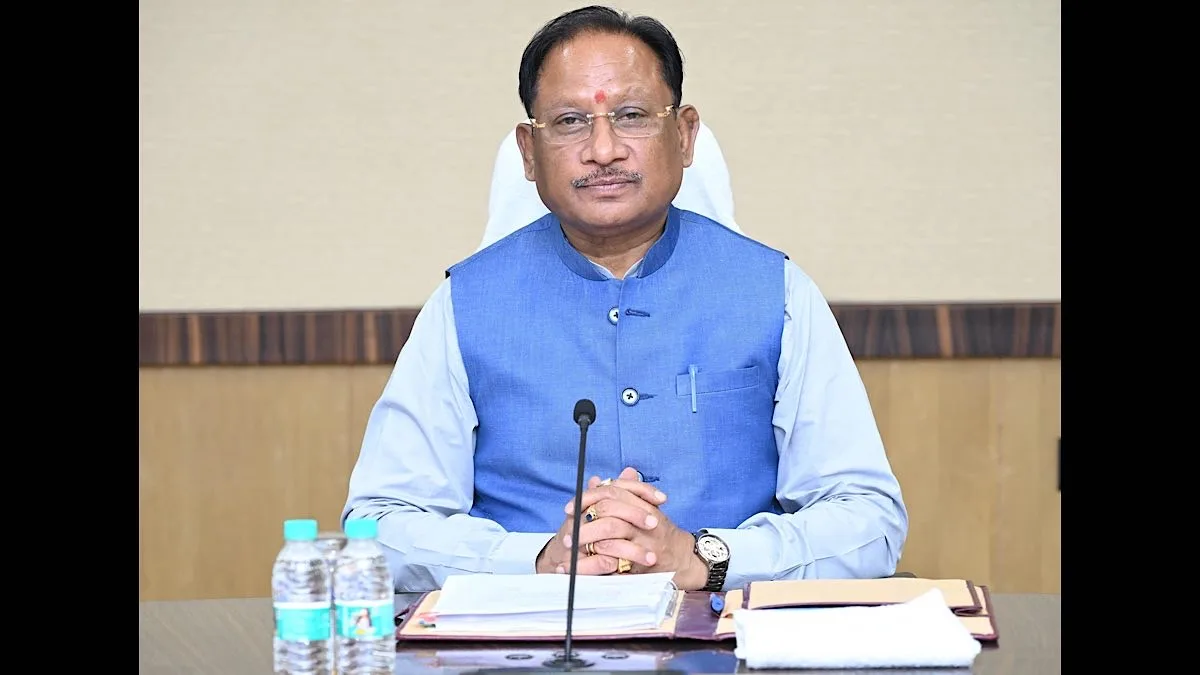
The Chhattisgarh Cabinet on Tuesday approved a series of measures aimed at expanding rural employment, strengthening local livelihoods and promoting sustainable development. The decisions were taken at a meeting chaired by Chief Minister Vishnu Deo Sai at Mantralaya, Mahanadi Bhawan. Together, the initiatives seek to address employment generation, rural infrastructure, local enterprise development and clean energy production across the state.
One of the most significant decisions was the approval of the draft Viksit Bharat – Guarantee for Rozgar and Aajeevika Mission (Gramin), or VB-G RAM G Yojana. Designed in line with the Government of India Act, 2025, the scheme provides a statutory guarantee of 125 days of unskilled wage employment each year to eligible adult members of rural households.
Advertisement
The programme is expected to support water conservation works, natural resource management, creation of rural infrastructure and development of livelihood assets. The aim is to generate sustainable employment opportunities while encouraging integrated development planning at the Gram Panchayat level.
A major focus of the scheme will be convergence among various government programmes. Development works undertaken under the mission will be linked with departmental schemes and aligned with the PM Gati Shakti initiative to improve planning and implementation.
Modern digital systems and technology-based monitoring mechanisms will be used to oversee projects, strengthen transparency and improve accountability. This initiative is expected to allow more effective tracking of outcomes and better utilisation of public resources. The financial burden of the scheme will be shared between the Centre and the state in a 60:40 ratio.
For the 2026-27 financial year, the state government has earmarked ₹4,000 crore for its implementation. In another key decision aimed at strengthening village economies, the Cabinet approved the launch of the Atal Aajeevika Samriddhi Haat scheme.
Under the initiative, production centres for handloom, weaving, tailoring and handicrafts will be established in rural areas. Processing units linked to pulses, oilseeds, rice milling and dairy activities will also be developed to create value addition opportunities closer to the source of production.
The scheme further envisages service centres equipped with cold storage facilities, solar dryers, agricultural equipment repair units and Atal Digital Centres. Marketing and supply centres will also be created to improve access to markets for locally produced goods.
BJP spokesperson Anurag Agrawal said that the initiative is intended to maximise the use of existing infrastructure and machinery while encouraging local production, processing, service delivery and entrepreneurship. By creating economic activity within villages, the programme is expected to generate fresh opportunities for both employment and self-employment.
The Chhattisgarh State Rural Livelihood Mission has been designated as the nodal agency for implementation, while the Panchayat and Rural Development Department will oversee execution as the nodal department. The government expects the scheme to provide momentum to agriculture, food processing, rural services, digital technology, green energy and local market networks, helping create a more resilient rural economy.
The Cabinet also approved the draft Chhattisgarh Compressed Biogas Policy (CG-CBG Policy), 2026, which seeks to convert agricultural residue, municipal solid waste, livestock waste and other organic materials into compressed biogas. The policy is aimed at promoting scientific waste management, reducing greenhouse gas emissions, encouraging environmental conservation and increasing the production of bio-fertilisers. It is also expected to contribute to rural economic activity by creating a new ecosystem around clean energy production.
According to official estimates prepared under the state’s Anjor Vision 2047 framework, Chhattisgarh has the potential to produce nearly five lakh tonnes of compressed biogas annually. The Chhattisgarh Biofuel Development Authority has been designated as the state nodal agency for the implementation of the policy. The Energy Department has been authorised to issue the necessary guidelines and administrative orders for its execution.
Chief Minister Sai said that the Cabinet decisions reflect the government’s emphasis on creating employment opportunities in rural areas while ensuring sustainable and environmentally responsible growth. He said the initiatives are designed to strengthen village economies, improve livelihoods and create long-term development opportunities across the state.